Do Introverts Need Less Connection?
The research points to a different question: not how much, but what kind.
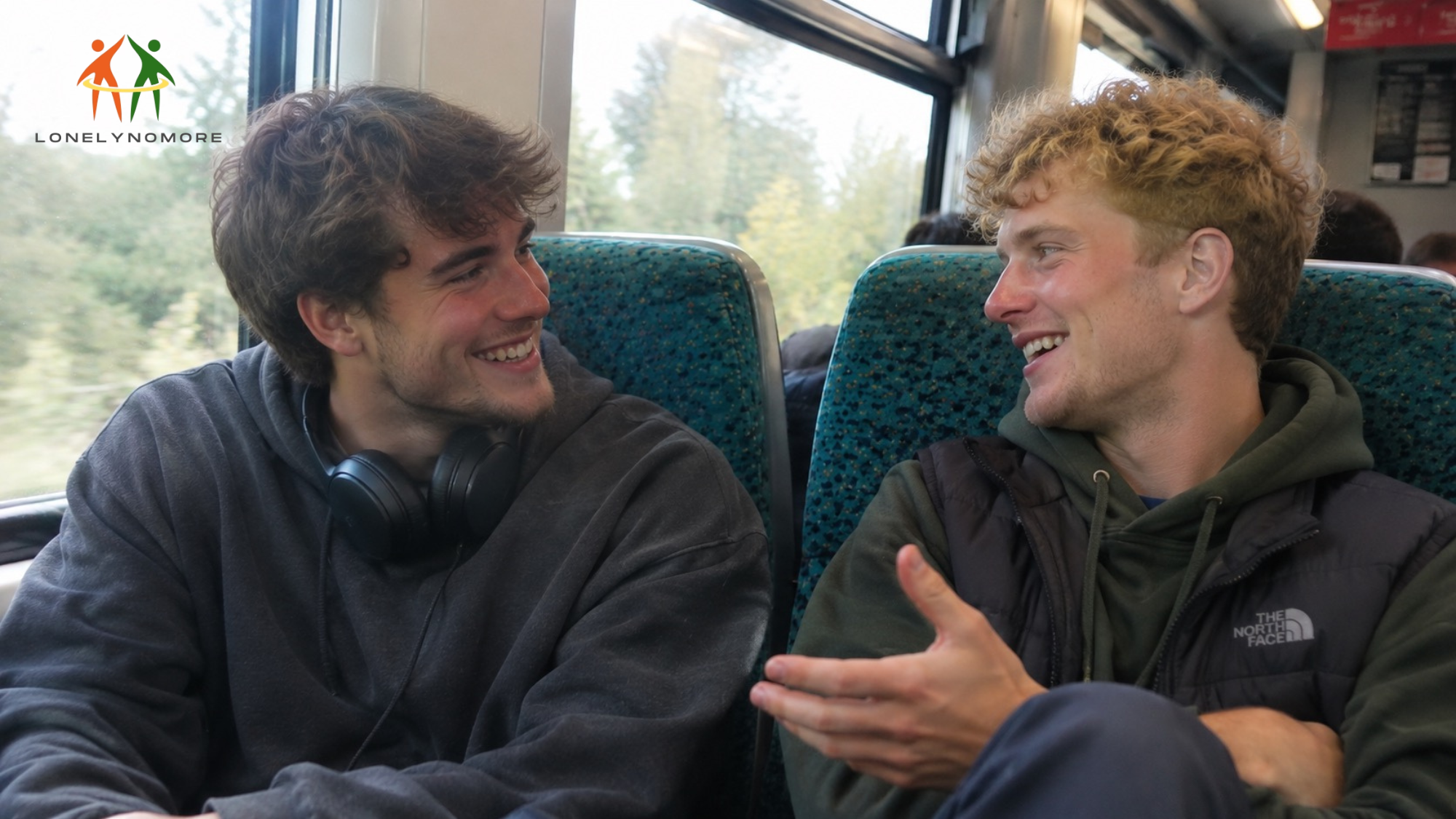
"Please have a conversation with a new person on the train today."
Some commuters at a station in Homewood, Illinois, were given that instruction. They reported a more positive journey than commuters told to keep to themselves, and said it was no less productive. Separate commuters, asked to predict the result, expected the opposite.
The study, by Nicholas Epley and Juliana Schroeder, then both at the University of Chicago, tested trains and buses. A second group was told: "Please keep to yourself and enjoy your solitude on the train today." In the first experiment, the conversations averaged about 14 minutes.
That raises a question about introverts. If you are one, the instruction may have made you wince. And it brings up an idea that sounds like plain common sense: introverts simply need less connection.
A Comfortable Idea
It is a comfortable idea. It tells quiet people they are fine as they are, and it tells everyone else there is nothing to worry about. But if it is wrong, quiet people may be left lonelier than they need to be, with everyone around them assuming that is how they like it. So I went looking for evidence.
Two words need pinning down first. Personality researchers often treat extraversion as one of five broad traits, with introversion at the low end of the scale. It is a scale, not a box. And loneliness is not the same as being alone. The Office for National Statistics describes it as a "subjective, unwelcome feeling of lack or loss of companionship", one that arises from a gap between the quantity and quality of relationships we have and those we want. It adds that loneliness is different from social isolation.
So loneliness depends on what you want, not only on who is around. What does the evidence say about introverts? A 2020 analysis pooled studies covering more than 93,000 people. It found that low extraversion, and a tendency towards anxiety and low mood, had the strongest links to loneliness among the five traits. That doesn't show introverts need more connection. Averages hide a lot, and the press release for the study adds that "lonely people can be very different." But it makes "introverts are fine on their own" look too simple.
The Forecast Problem
So where might the idea come from? One answer is that we are poor forecasters of our own social lives.
In a 2013 paper, people who scored as introverts were asked to predict how acting extraverted would feel. In its experiments, they tended to be less accurate in their predictions, particularly by overestimating the negative feelings and self-consciousness that acting extraverted would bring. The commuter paper notes that, in earlier work, both introverts and extraverts reported a more positive experience while acting extraverted than while acting introverted.
Back to the commuters. The researchers also measured personality in three experiments, using a short questionnaire on the Big Five traits, extraversion among them. They found no sign that the benefit of connecting depended on any of them. The authors say the mistaken preference for solitude stems partly from underestimating how interested other people are in connecting, and that avoiding contact keeps us from learning what it is really like.
It isn't only introverts who misjudge. A 2018 paper found that after conversations, people systematically underestimated how much their partners liked them, and the gap lasted for several months among new dorm mates. On average, then, the person you are talking to may like you more than you think.
What Kind of Talk?
Here the research starts to point to a different question. In 2010, psychologists asked undergraduates to wear a digital recorder for four days. It switched on for 30 seconds every 12.5 minutes, and coders marked whether each clip held small talk or a substantive conversation. Compared with the unhappiest people, the happiest had roughly a third as much small talk and twice as many substantive conversations.
The link to substantive conversation was "basically unaffected" when the researchers took the Big Five personality traits into account. They are careful, though. They call their findings "causally ambiguous": happy people may attract more company, or deeper conversations may make people happier.
A 2022 paper adds a twist about depth. Across several experiments, people were especially prone to overestimate how awkward deep conversations would be, compared with shallow ones. They also felt more connected to deep conversation partners than to shallow ones.
Friendship Takes Hours
One more piece. Jeffrey Hall, a University of Kansas researcher, surveyed adults who had recently moved, and followed first-year students for several weeks. He estimated that it takes between 40 and 60 hours together to form a casual friendship, and more than 200 hours to become good friends. Time spent hanging out counted for more than time spent working together.
The study is about friendship in general, not about introverts. It does suggest that a slow build is a normal part of how people become friends.
What I Think
This part is my opinion, not a research finding.
I think "I need less" and "I need something different" are easy to confuse from the inside. The first closes the question. The second gives you something to look for.
I suspect many people who call themselves introverts are describing a preference for a smaller circle, longer conversations and a slower start, not a lack of wanting people. That would fit the ONS idea of loneliness as a gap between what you have and what you want.
I think the commuters carry the other lesson. We plan our social lives around forecasts we have rarely tested. Nobody should be pushed into a crowd. But a forecast is not a fact, and it may be worth testing yours in a way that feels comfortable to you. A better question than the one in the title might be: what kind of connection am I missing?
What I Can't Say
I can't say how much connection an introvert needs, or whether it differs from what an extravert needs. None of the studies I found measured that. The recorder study followed 79 undergraduates, and the happiest people in it also spent about a quarter less time alone, so I am not saying that quantity doesn't matter. The commuter study asked people for a single conversation with a stranger, which is not the same as making a friend, and finding no sign of a personality effect does not prove there is none. Averages are not individuals. So "not how much, but what kind" is a question the research points towards, not an answer it gives.
Being an introvert is not a flaw, and neither is wanting more connection.
A Different Starting Point
Full disclosure: I'm a co-founder of LonelyNoMore. Nothing in this article shows that any product, including ours, can change how connected anyone feels.
What this research does reinforce, for me, is that the kind of connection is worth asking about, and it seems reasonable to begin by understanding what you are missing. LonelyNoMore is a psychology-based application that helps to address loneliness, and we are building a community around it. It is about friendship and feeling less alone, not romance. It starts with the music you already love, because the patterns in what you listen to quietly reflect deep psychological traits you may never have put into words. That is where the power of music and psychology come together. The approach draws on the OCEAN model, one of the most widely validated frameworks in personality science, and is developed in partnership with Professor Adrian North of Curtin University. In that model, extraversion is one of five traits, measured on a scale rather than as a label.
The first aim is simple: to help you understand yourself and feel less alone.
LonelyNoMore uses the power of music and psychology to help you understand yourself and feel less alone.
Start at https://lnm.world/
Sources
• Epley and Schroeder (2014), Journal of Experimental Psychology: General 143(5): 1980-1999: Mistakenly Seeking Solitude.
• Zelenski and colleagues (2013), Journal of Personality and Social Psychology 104(6): 1092-1108: Personality and affective forecasting: trait introverts underpredict the hedonic benefits of acting extraverted. Abstract only.
• Boothby and colleagues (2018), Psychological Science 29(11): 1742-1756: The Liking Gap in Conversations: Do People Like Us More Than We Think?. Abstract only.
• Buecker and colleagues (2020), European Journal of Personality 34(1): 8-28: Loneliness and the Big Five personality traits: A meta-analysis. Press release: Personality and loneliness.
• Mehl and colleagues (2010), Psychological Science 21(4): 539-541: Eavesdropping on Happiness: Well-Being Is Related to Having Less Small Talk and More Substantive Conversations. Full text: author manuscript.
• Kardas, Kumar and Epley (2022), Journal of Personality and Social Psychology 122(3): 367-398: Overly shallow?: Miscalibrated expectations create a barrier to deeper conversation. Partial abstract only.
• Hall (2019), Journal of Social and Personal Relationships 36(4): 1278-1296: How many hours does it take to make a friend?. Hour estimates: University of Kansas News Service (2018), Study reveals hours it takes to make a friend.
• Office for National Statistics (5 December 2018): Introduction: Developing national indicators of loneliness and Measuring loneliness: guidance for use of the national indicators on surveys.